




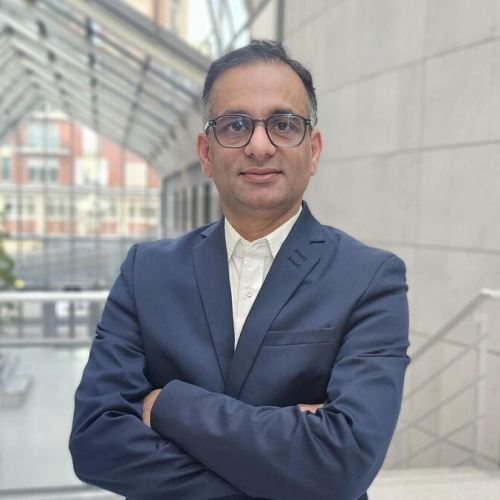
I am associate professor of CSR and sustainability at EMLV. I have taught extensively as visiting professor in various French business schools since 2009. Over the years, I have developed an innovative and interactive approach to teaching. I use a diverse set of instructional methods in my classroom - games, demos, videos, cases, quizzes, debates, and guest speakers, are among my favorite techniques. My teaching interests include ?corporate social responsibility', ?business ethics', ?sustainability', ?strategic management', and ?international business', I am also the referent person for CSR (corporate social responsibility) of the school. As CSR head I work closely with the faculty to develop courses in CSR, sustainability and social entrepreneurship. But CSR is not limited to the classrooms; hence we engage students in a range of co-curricular and extra-curricular activities and projects in the above mentioned areas. Further, we work with a number of national as well international institutions such as UNEP (United Nations Environment Programme), Global Compact, PRME on various programs and projects of mutual interest. My scholarly interests range widely, from the sustainability and corporate social responsibility to responsible consumption and green marketing. My thesis work primarily focuses on the discourse of corporate social responsibility and sustainability in business and society. I illustrate how these modern notions are viewed by the society and how they are shaping newer societal norms and standards. In addition to my teaching and research experience, I have nine years of managerial experience, that helps me to integrate theory with practice in my class lectures. I have intensively traveled in Europe and Asia due to my professional engagements and personal interests. Besides English and French, I can communicate in a couple of Indian languages.

Raheel Yasin; Muhammad Atif; Joather Alwali
If you don't care about me, I become lazy: A multilevel model of despotic leadership and employee procrastination Journal Article
In: International Journal Of Hospitality Management, vol. 140, pp. 104836, 2027.
@article{yasin_4573,

title = {If you don't care about me, I become lazy: A multilevel model of despotic leadership and employee procrastination},

author = {Raheel Yasin and Muhammad Atif and Joather Alwali},

url = {https://doi.org/10.1016/j.ijhm.2026.104836},

year  = {2027},

date = {2027-01-01},

journal = {International Journal Of Hospitality Management},

volume = {140},

pages = {104836},

abstract = {Grounded in the social distance theory of power, this study examines the direct and indirect effects of hotel-level despotic leadership on individual-level factors, including emotional contagion, psychological distance, and employee procrastination. A three wave research design was adopted to collect data from the Malaysian hospitality industry and multilevel modeling was used in Mplus to analyze the data. The results confirmed existence of positive correlation between hotel-level despotic leadership and individual-level emotional contagion, psychological distance, and employee procrastination. Emotional contagion was also found to be positively associated with psychological distance, which, in turn, exhibited a positive relationship with employee procrastination. Furthermore, emotional contagion and psychological distance sequentially mediate the nexus between hotel-level despotic leadership and employee procrastination. Overall, this study extends the social distance theory of power by elucidating the multilevel mechanisms through which despotic leadership influences employee procrastination in the hospitality context.},

keywords = {},

pubstate = {published},

tppubtype = {article}

}
Marinette Kamaha; Serge Valant Gandja; Muhammad Atif
Beyond traditional finance: digital financial, cash management and employment outcomes in emerging economies Journal Article
In: Review of Accounting and Finance, pp. 1-19, 2026.
@article{kamaha_4574,

title = {Beyond traditional finance: digital financial, cash management and employment outcomes in emerging economies},

author = {Marinette Kamaha and Serge Valant Gandja and Muhammad Atif},

url = {https://doi.org/10.1108/RAF-05-2025-0171},

year  = {2026},

date = {2026-08-01},

journal = {Review of Accounting and Finance},

pages = {1-19},

abstract = {Purpose - This study aims to examine how digital financial penetration (DFP) influences cash

management practices (CMP) and employment outcomes in emerging economies. Drawing on an

integrated friction-reduction framework that combines transaction cost economics and information

asymmetry theory and anchoring our analysis in institutional substitution and digital leapfrogging

perspectives, the authors investigate the mechanisms through which DFP shapes firm-level financial and

labor market outcomes.

Design/methodology/approach - Using firm-level data from 33,136 firms across 30 countries, the authors

used instrumental variable regression, moderated mediation, threshold analyses and structural equation

modeling to examine how DFP influences employment through CMP.

Findings - The DFP significantly enhanced CMP and employment outcomes, with the strongest effects in

less financially developed contexts. Instead of complementing traditional financial infrastructure, DFP acts as

a substitute, with its impact being most pronounced in low-development environments. Threshold analysis

confirmed regime-dependent effects, while mediation analysis identified CMP as a significant channel linking

DFP to employment, alongside other complementary pathways.

Practical implications - The findings suggest prioritizing digital financial infrastructure investments in

less-developed financial markets that yield the highest returns for employment creation and wage

enhancement.

Social implications - At the firm level, DFP enables businesses to create more jobs and better wages,

particularly in less developed financial markets. These firm-level improvements aggregate and may contribute

to inclusive economic growth. However, their link to macro-level societal outcomes warrants further

investigation.

Originality/value - This study contributes to the literature by integrating friction-reduction and

institutional substitution frameworks to explain how DFP shapes firm outcomes, revealing that digital

finance operates as a substitute for rather than a complement to traditional financial infrastructure.

Empirically, it demonstrates both job creation and wage effects while uncovering threshold dynamics

across development contexts.},

keywords = {},

pubstate = {online},

tppubtype = {article}

}
Pallavi Singh; Ruchi Agarwal; Muhammad Atif
Identity and Capability Dynamics in Masstige Sustainable Luxury: Insights From Sustainable Start?Ups in Emerging Markets Journal Article
In: Business Ethics, the Environment and Responsibility, vol. 0, pp. 1-15, 2026.
@article{singh_4575,

title = {Identity and Capability Dynamics in Masstige Sustainable Luxury: Insights From Sustainable Start?Ups in Emerging Markets},

author = {Pallavi Singh and Ruchi Agarwal and Muhammad Atif},

url = {https://doi.org/10.1111/beer.70141},

year  = {2026},

date = {2026-07-01},

journal = {Business Ethics, the Environment and Responsibility},

volume = {0},

pages = {1-15},

abstract = {Sustainable luxury has attracted growing academic interest, but there is little research on how sustainability-oriented start-ups

in emerging markets create luxury positioning while remaining accessible to price-sensitive consumers. This study explores

the emergence and operationalization of Masstige Sustainable Luxury, defined as an approach that combines aspirational premium value, broader market accessibility, and environmental and social responsibility. Based on 30 semi-structured interviews

with founders and key employees in 10 Indian start-ups, this study integrates Organizational Identity Theory and Dynamic

Capabilities Theory to explain how identity and capability development interact under resource constraints. The findings suggest that resource abundance is not a sufficient condition for success. Instead, start-ups build three mutually reinforcing capabilities: Enduring Capability, Masstige Brand Capability, and Scale-Up Capability, creating durable product value, emotional

appeal, and responsible growth. The study contributes a Dynamic Interaction Model that demonstrates how sustainable start-ups

sense, seize, and transform opportunities while redefining prestige through affordability, authenticity, cultural resonance, and

sustainability-led value creation in emerging markets.},

keywords = {},

pubstate = {online},

tppubtype = {article}

}
Raheel Yasin; Muhammad Atif; Neuza Ribeiro
In: International Journal Of Hospitality Management, vol. 135, pp. 104606, 2026.
@article{yasin_4200,

title = {Authentic leadership as an energy booster for service creativity: The mediating role of access to strategic information and the moderating role of work passion},

author = {Raheel Yasin and Muhammad Atif and Neuza Ribeiro},

url = {https://doi.org/10.1016/j.ijhm.2026.104606},

year  = {2026},

date = {2026-05-01},

journal = {International Journal Of Hospitality Management},

volume = {135},

pages = {104606},

abstract = {Based on the self-determination theory (SDT), this paper formulates and tests a moderated mediation model to explore the nexus between authentic leadership, access to strategic information, employee work passion, and service creativity of employees. A sample of 364 frontline employees of Malaysian hospitality sector was used to gather the data. Using structural equation modeling in Mplus, the results confirm that authentic leadership has a positive impact on access to strategic information and employee service creativity. Moreover, access to strategic information mediates between Authentic leadership and employee service creativity. Results also support the moderating effects of employee work passion between access to strategic information and employee service creativity. This study extends SDT by conceptualizing access to strategic information as a motivational factor and by identifying employee work passion as an important boundary condition in the leadership-creativity relationship.},

keywords = {},

pubstate = {published},

tppubtype = {article}

}
Raheel Yasin; Mohammad Saleh Bataineh; Muhammad Atif; Md Tareq Bin Hossain
In: Benchmarking: an international journal, vol. 33, no. 5, pp. 1459-1484, 2026.
@article{yasin_3465,

title = {Green HRM and employer branding: corporate environmental sustainability and organizational safety climate mediating role and moderating role of job experience},

author = {Raheel Yasin and Mohammad Saleh Bataineh and Muhammad Atif and Md Tareq Bin Hossain},

url = {https://doi.org/10.1108/BIJ-01-2022-0052},

year  = {2026},

date = {2026-04-01},

journal = {Benchmarking: an international journal},

volume = {33},

number = {5},

pages = {1459-1484},

abstract = {Purpose


This study purposes a model based on competitive advantage theory, social identity theory and signaling theory that explores the relationship between GHRM and employer branding mediated by corporate environmental sustainability and organizational safety climate and employees experience as a moderator.

Design/methodology/approach


Data were gathered using a survey questionnaire from 329 employees working in this sector. Structural Equational Modeling was employed for data analysis through Smart PLS.

Findings


Results confirm that GHRM has a positive influence on corporate environmental sustainability and corporate environmental sustainability has a positive influence on organizational safety climate. Further, the results confirm that the organizational safety climate has a positive influence on employer branding. The results of partial least squares multi-group analysis show that difference between job experience influences employer branding. The results also lend support to the mediating effects of corporate environmental sustainability between GHRM and organizational safety climate, and the mediating effect of organizational safety climate between GHRM and employer branding.

Practical implications


The findings of the study guide policymakers and management of the textile industry to emphasize GHRM in order to make a working climate clean and safe. This working environment will be their competitive edge and a source of their organization branding.

Originality/value


HR literature has largely overlooked the physical work environment, instead focusing on psychological safety, for example (job stress, emotional exhaustion). This study presents a model demonstrating that a green work environment, fostered through GHRM practices enhances employer branding.},

keywords = {},

pubstate = {published},

tppubtype = {article}

}
Salman Bahoo; Ilan Alon; Muhammad Atif; Haider Saleem
COVID-19 and foreign direct investment: the role of governance infrastructure, social arrangements and digitalisation Journal Article
In: European Journal Of International Management, 2026.
@article{bahoo_4140,

title = {COVID-19 and foreign direct investment: the role of governance infrastructure, social arrangements and digitalisation},

author = {Salman Bahoo and Ilan Alon and Muhammad Atif and Haider Saleem},

url = {https://www.inderscience.com/info/ingeneral/forthcoming.php?jcode=ejim},

year  = {2026},

date = {2026-01-01},

journal = {European Journal Of International Management},

abstract = {This study applies financial contagion theory to explain the disruptions caused by COVID-19 in global Foreign Direct Investment (FDI). A comprehensive framework to mitigate the effects of COVID-19 on FDI is lacking. This research presents and tests a framework that combines governance infrastructure (based on the lens of institutional governance theory), social arrangements (welfare state theory) and digitalisation (digital platform theory) to mitigate the adverse impact of COVID-19. It provides two significant findings. First, strong governance infrastructure, social arrangements and digital infrastructure at the country-level reduce the negative effects of COVID-19 on FDI. However, these factors cannot completely mitigate the impact of COVID-19 on FDI. Second, the combined synergistic impact of governance, social and digital infrastructure fully reduces the adverse effects of COVID-19 on investment globally (for 198 countries). The synergistic impact suggests that policy recommendations strengthening governance, enhancing social safety nets and expanding digitalisation are crucial for addressing future crises.},

keywords = {},

pubstate = {online},

tppubtype = {article}

}
Muhammad Arshad; Sadia Afzal; Mariam Farooq; Omer Farooq; Muhammad Atif
The effect of organizational identification on AIS acceptance: how gender and collectivism shape usage patterns Journal Article
In: Journal of Accounting and Organizational Change, vol. 21, no. 6, pp. 1061-1080, 2025.
@article{arshad_3464,

title = {The effect of organizational identification on AIS acceptance: how gender and collectivism shape usage patterns},

author = {Muhammad Arshad and Sadia Afzal and Mariam Farooq and Omer Farooq and Muhammad Atif},

url = {https://doi.org/10.1108/JAOC-05-2024-0165},

year  = {2025},

date = {2025-11-01},

journal = {Journal of Accounting and Organizational Change},

volume = {21},

number = {6},

pages = {1061-1080},

abstract = {Purpose


This paper aims to investigate the impact of organizational identification on employees' usage of newly introduced Accounting Information Systems (AIS), with a particular focus on the mediating influence of attitude and the moderating roles of gender and collectivism. Drawing on social identity theory, the research framework was developed.

Design/methodology/approach


Data were collected using a survey method from 500 service sector employees adapting to a newly implemented AIS. Structural equation modeling (SEM) in Mplus was used for the model testing.

Findings


The results indicate that organizational identification does not directly influence employees' AIS usage. Nevertheless, the study findings demonstrate that it exerts an indirect influence on employees' AIS usage through the mediation of their attitude toward the using of new AIS. The moderation of gender and collectivism emerged as crucial, showing the strongest effect of organizational identification on AIS usage among highly collectivist female employees, followed by highly collectivist male employees, and then less collectivist female employees. This relationship is weakest in less collectivist male employees.

Originality/value


To the best of the authors' knowledge, this investigation stands as the first to integrate social identity theory with cultural values and the gender of employees, offering insights into the employees' AIS usage.},

keywords = {},

pubstate = {published},

tppubtype = {article}

}
Shahzeena Amjad; Raheel Yasin; Yasin Munir; Muhammad Atif
Knowledge-oriented leadership, organizational trust and psychological capital: a gateway to innovative performance: a multisource approach Journal Article
In: Management Research Review, vol. 48, no. 8, pp. 1231-1256, 2025.
@article{amjad_3757,

title = {Knowledge-oriented leadership, organizational trust and psychological capital: a gateway to innovative performance: a multisource approach},

author = {Shahzeena Amjad and Raheel Yasin and Yasin Munir and Muhammad Atif},

url = {https://doi.org/10.1108/MRR-06-2024-0468},

year  = {2025},

date = {2025-06-01},

journal = {Management Research Review},

volume = {48},

number = {8},

pages = {1231-1256},

abstract = {Purpose - The purpose of this study is to explore the interconnection among knowledge-oriented leadership,

organizational trust, psychological capital and innovative performance via a serial mediation model, drawing

upon contingency theory and positive organizational behavior theory.

Design/methodology/approach - Data were collected from private and public educational institutes in

Sialkot, Pakistan, by using a time-lagged design. Data analysis was done by using Smart PLS and SPSS.

Findings - The results confirm a positive relationship among knowledge-oriented leadership, organizational trust,

psychological capital and innovative performance. Specifically, the association between knowledge-oriented leadership

and innovative performance is sequentially mediated by organizational trust and psychological capital. The findings

underscore the substantial impact of knowledge-oriented leadership on organizational trust, psychological capital and

innovative performance, highlighting its role in enhancing these aspectswithin an educational institution.

Research limitations/implications - The current study represents a notable expansion in the realm of

knowledge-oriented leadership research, as only a limited number of empirical studies have delved into this

area. Moreover, this study contributes to the existing literature by not only advancing the understanding of

knowledge-oriented leadership but also shedding light on organizational trust, psychological capital and

innovative performance within the context of educational institutions in Pakistan, specifically in Sialkot.

Practical implications - The study's findings indicate that educational institutions led by knowledge-oriented

leadership demonstrate noteworthy levels of organizational trust, psychological capital and innovative

performance. Moreover, knowledge-oriented leadership has a positive impact on the innovative performance of

educational institutes. These results suggest that educational institutions in Sialkot, Pakistan, operate in alignment

with their intended purpose and offer current data for researchers' use.},

keywords = {},

pubstate = {published},

tppubtype = {article}

}
Raheel Yasin; Ayesha Ali; Sarah Namoco; Muhammad Atif
Passport discrimination from the lens of critical phenomenological perspective Journal Article
In: International Journal of Sociology and Social Policy, vol. 45, no. 1-2, pp. 132-154, 2025.
@article{yasin_4288,

title = {Passport discrimination from the lens of critical phenomenological perspective},

author = {Raheel Yasin and Ayesha Ali and Sarah Namoco and Muhammad Atif},

url = {https://doi.org/10.1108/IJSSP-04-2024-0169},

year  = {2025},

date = {2025-02-01},

journal = {International Journal of Sociology and Social Policy},

volume = {45},

number = {1-2},

pages = {132-154},

abstract = {Purpose


Little is known about how international individuals and travelers face and experience discrimination due to their passport. The purpose of this study is to explore factors that contribute to a new form of discrimination, i.e. passport discrimination. There exists a dominant gap in the literature, both empirically and theoretically, which explores this dimension of discrimination. To better understand this central phenomenon, this study amalgamated the concepts from the theories of social identity, self-categorization and system justification.

Design/methodology/approach


To delve into the essence of the participants' lived experiences with passport discrimination, this study employed the existential-phenomenological philosophy of a qualitative research design. Data were gathered from personal interviews with 10 passport holders from different Asian countries.

Findings


The findings of this study revealed that citizens of developing and underdeveloped countries commonly experience passport discrimination in salary structure, promotions, training and hiring processes. Additionally, they face passport discrimination during visa issuance and proceedings at immigration counters.

Originality/value


This study unlocks the door for researchers to explore new dimensions of discrimination. Future studies may investigate the level of impact of passport discrimination from a human resource perspective through a positivist approach.},

keywords = {},

pubstate = {published},

tppubtype = {article}

}
Muhammad Atif; Marco Bottura; Raheel Yasin
Public issues and public expectations: Disentangling responsibility discourse dimensions in CSR and sustainability books Journal Article
In: European Management Journal, vol. 42, no. 6, pp. 957-967, 2024.
@article{atif_4292,

title = {Public issues and public expectations: Disentangling responsibility discourse dimensions in CSR and sustainability books},

author = {Muhammad Atif and Marco Bottura and Raheel Yasin},

url = {https://doi.org/10.1016/j.emj.2023.07.008},

year  = {2024},

date = {2024-12-01},

journal = {European Management Journal},

volume = {42},

number = {6},

pages = {957-967},

abstract = {This study aims to understand how society views modern business practices and what is expected of businesses. To do this, we unearth the covert patterns and latent themes of corporate social responsibility (CSR) discourse in popular CSR and sustainability books. Building upon Habermas' discourse ethics, CSR and sustainability constructs are examined from societal perspectives, assuming that the notion of conceptualization is embedded in the societal context. We find two main themes which consistently refer to five dimensions of discourse: economic, social, environmental, philosophical, and political dimensions. Further, we found that an ?expectation gap? exists between what the public expects business to accomplish, and what businesses believe they must accomplish in their responsibility agendas. We argue that the term CSR remains relatively academic and has limited exposure in public media.},

keywords = {},

pubstate = {published},

tppubtype = {article}

}
Raheel Yasin; Neuza Ribeiro; Muhammad Atif; Ayesha Ali
Authentic leadership: a source of tacit knowledge sharing and career competence in service sector Journal Article
In: Leadership & Organization Development Journal, vol. 45, no. 8, pp. 1335-1355, 2024.
@article{yasin_4290,

title = {Authentic leadership: a source of tacit knowledge sharing and career competence in service sector},

author = {Raheel Yasin and Neuza Ribeiro and Muhammad Atif and Ayesha Ali},

url = {https://doi.org/10.1108/LODJ-10-2023-0578},

year  = {2024},

date = {2024-10-01},

journal = {Leadership & Organization Development Journal},

volume = {45},

number = {8},

pages = {1335-1355},

abstract = {Purpose


This study aimed to examine the correlation between authentic leadership and career competence, exploring the mediating roles of tacit knowledge sharing and employee service innovative behavior.

Design/methodology/approach


Data were collected using convenience sampling and a time-lagged design from the Pakistani banking sector. The time-lagged design was employed to gather data at two different points in time. SPSS statistical software was used for descriptive analysis, and hypotheses were tested using Mplus.

Findings


The results demonstrate that authentic leadership has a significant positive impact on tacit knowledge sharing. This knowledge sharing, in turn, positively impacts employee service innovative behavior, which subsequently enhances career competence. Furthermore, tacit knowledge sharing mediates the relationship between authentic leadership and employee service innovative behavior.

Social implications


This study has social implications for organizations aiming to align their inclusive goals with societal needs. The findings can help foster a culture of knowledge sharing, thereby contributing to societal innovation.

Originality/value


This study provides valuable insights into how authentic leadership contributes to career competence, thus enriching the existing literature on this topic.},

keywords = {},

pubstate = {published},

tppubtype = {article}

}
Enrico Fontana; Muhammad Atif; Huma Sarwar
Pressures for sub-supplier sustainability compliance: The importance of target markets in textile and garment supply chains Journal Article
In: Business Strategy And The Environment, vol. 33, no. 5, pp. 3794-3810, 2024.
@article{fontana_4291,

title = {Pressures for sub-supplier sustainability compliance: The importance of target markets in textile and garment supply chains},

author = {Enrico Fontana and Muhammad Atif and Huma Sarwar},

url = {https://doi.org/10.1002/bse.3680},

year  = {2024},

date = {2024-07-01},

journal = {Business Strategy And The Environment},

volume = {33},

number = {5},

pages = {3794-3810},

abstract = {We propose that sub-supplier sustainability compliance in developing economies' textile and garment supply chains can be more effectively realized by understanding sub-suppliers' target markets. We introduce the concept of sub-suppliers' customer share of production as the share of production that sub-suppliers sell to ?exporting? direct suppliers that cater to the international market vis-à-vis ?local? direct suppliers that cater to the domestic market. Through this concept and qualitative evidence, we offer a model outlining that as sub-suppliers sell more to exporting direct suppliers, they encounter increased coercive, competitive, and collaborative pressures for sustainability compliance. This article contributes to the multi-tier sustainable supply chain management literature by illustrating how target markets exert pressures for sub-supplier sustainability compliance, and why some sub-suppliers are more inclined to invest in sustainability compliance, some decouple from it, and others invest beyond compliance. We conclude with business strategy guidelines for managers in textile and garment supply chains.},

keywords = {},

pubstate = {published},

tppubtype = {article}

}
Muhammad Arshad; Sadia Afzal; Naeem Ashraf; Muhammad Atif; Omer Farooq
Career Transition of Employees toward Entrepreneurship: A Person-Environment Perspective Journal Article
In: Revue de l'Entrepreneuriat, vol. 22, no. 1, pp. 111 to 129, 2024.
@article{arshad_4289,

title = {Career Transition of Employees toward Entrepreneurship: A Person-Environment Perspective},

author = {Muhammad Arshad and Sadia Afzal and Naeem Ashraf and Muhammad Atif and Omer Farooq},

url = {https://doi.org/10.3917/e.entre.231.0111},

year  = {2024},

date = {2024-01-01},

journal = {Revue de l'Entrepreneuriat},

volume = {22},

number = {1},

pages = {111 to 129},

abstract = {The glorification of successful ventures launched by college dropouts or college students such as Sergey Brin, Michael Dell, Bill Gates, Steve Jobs, Jerry Yang, and Mark Zuckerberg has led to the perception that this is a common path to entrepreneurship. However, individuals who left their jobs to start ventures created a number of dominant firms. For instance, the founders of Amazon and Alibaba were both employed when they developed their business idea (Byers, 2007). According to some estimates, at least nine out of ten entrepreneurs were employees before starting a new business (Sørensen & Fassiotto, 2011).

Researchers have highlighted the benefits of prior experience on the performance of new ventures started by employees (Mai & Zheng, 2013) and examined firm and individual drivers such as work environment, intellectual property ownership rights, and individual innovation orientation (Lee, Wong, Der Foo, & Leung, 2011). While this research has enhanced our understanding of employee entrepreneurship, it has primarily investigated employee entrepreneurship in the context of developed economies and technology-intensive industries. As employee entrepreneurship has the potential to contribute to the economic development of a country, it is critical to examine this question in a developing country context. Such contexts are significantly different from developed countries in terms of employment opportunities and industry characteristics (Ahsan, Adomako, & Mole, 2020; Fainshmidt, Judge, Aguilera, & Smith, 2018)...},

keywords = {},

pubstate = {published},

tppubtype = {article}

}
Marinette Kamaha Njiwa; Muhammad Atif; Muhammad Arshad; Nawazish Mirza
The impact of female dominance on business resilience: A technology adoption perspective Journal Article
In: Journal Of Business Research, vol. 161, pp. 113846, 2023.
@article{kamaha_njiwa_4293,

title = {The impact of female dominance on business resilience: A technology adoption perspective},

author = {Marinette Kamaha Njiwa and Muhammad Atif and Muhammad Arshad and Nawazish Mirza},

url = {https://doi.org/10.1016/j.jbusres.2023.113846},

year  = {2023},

date = {2023-06-01},

journal = {Journal Of Business Research},

volume = {161},

pages = {113846},

abstract = {This study explores the relationship between women entrepreneurship and business resilience, the moderation of pre-crisis and during-crisis technology adoption, and female representation in top management in the aforementioned relationship. Building on the ?mom-cession? theory, the authors propose an integrated multiple-moderation model to understand the boundary conditions that can reduce the negative effect of female dominance on business resilience. Using a sample of 9035 firms across 24 countries and employing a structural equation modeling technique for model testing, this study found a negative relationship between female dominance and business resilience. Female-dominated firms led by female top managers exhibited lower business resilience. The results showed that firms' pre- and post-COVID-19 technology adoption moderated the negative relationship between female dominance and business resilience such that this relationship was weaker for firms that had already adopted technology before COVID-19 and stronger for firms that adopted technology only during COVID-19.},

keywords = {},

pubstate = {published},

tppubtype = {article}

}
Raheel Yasin; Jan Ghulam; Huseynova Aydan; Muhammad Atif
Inclusive leadership and turnover intention: the role of follower-leader goal congruence and organizational commitment Journal Article
In: Management Decision, vol. 61, no. 3, pp. 589-609, 2023.
@article{yasin_4396,

title = {Inclusive leadership and turnover intention: the role of follower-leader goal congruence and organizational commitment},

author = {Raheel Yasin and Jan Ghulam and Huseynova Aydan and Muhammad Atif},

url = {https://doi.org/10.1108/MD-07-2021-0925},

year  = {2023},

date = {2023-03-01},

journal = {Management Decision},

volume = {61},

number = {3},

pages = {589-609},

abstract = {Purpose


Using a dual-lens of leader-member exchange (LMX) and social exchange theory (SET), this study aims to propose a conceptual model that explores the nexus between inclusive leadership and turnover intention as mediated by follower-leader goal congruence and organizational commitment.

Design/methodology/approach


Data were collected via a survey questionnaire from a sample of 322 front line employees working in different banks in Pakistan. The structural equational modeling (SEM) technique was used for hypotheses testing.

Findings


Findings of the study show that inclusive leadership has a positive influence on follower-leader goal congruence which in turn has a positive influence on organizational commitment. Further, organizational commitment has a negative influence on turnover intention. Additionally, the results lend support to the mediating effects of follower-leader goal congruence on the relationship between inclusive leadership and organizational commitment, and the mediating effect of organizational commitment on the relationship between follower-leader goal congruence and turnover intention.

Research limitations/implications


This research extends the literature on inclusive leadership, follower-leader goal congruence, organizational commitment and turnover intention. This study focuses on the follower-leader centric approach.

Practical implications


The findings of this study can guide policymakers and management of the banking industry to develop the inclusive leadership qualities of existing managers to reduce the turnover intention of their employees.

Originality/value


By incorporating LMX and SET, this study tests a model that demonstrates the mediating role of follower-leader goal congruence and organizational commitment in the relationship between inclusive leadership and employees' turnover intention.},

keywords = {},

pubstate = {published},

tppubtype = {article}

}
Muhammad Atif; Raheel Yasin; Md Tareq Bin Hossain
Exploring Despotic Leadership on Work Alienation Conference
41st EGOS Colloquium in Athens: "Creativity that Goes a Long Way", Athens, Greece, 2025.
@conference{atif_4197,

title = {Exploring Despotic Leadership on Work Alienation},

author = {Muhammad Atif and Raheel Yasin and Md Tareq Bin Hossain},

url = {https://www.egos.org/2025_Athens/General_Theme},

year  = {2025},

date = {2025-07-01},

booktitle = {41st EGOS Colloquium in Athens: "Creativity that Goes a Long Way"},

address = {Athens, Greece},

abstract = {Purpose:

Grounded in the framework of social distance of power theory, this research delves into the direct and indirect consequences of despotic leadership at the branch level on various individual-level factors, including emotional contagion, psychological distance and ultimately work alienation.

Methodology:

 Data were collected from 350 employees across 89 branches in two waves within the banking sector of Malaysia. MPLUS software is used for multilevel data analysis.

Results:

The results unveiled a positive correlation between branch-level despotic leadership and emotional contagion, psychological distance, and work alienation within each group. Moreover, emotional contagion was found to be positively associated with psychological distance, which, in turn, was positively linked to work alienation.

Originality

This study contributes to social distance of power theory by studying the relationship between despotic leadership and work alienation.},

note = {July 3-5, 2025},

keywords = {},

pubstate = {published},

tppubtype = {conference}

}
Muhammad Atif
Crafting Research for High-Impact Publishing Conference
Crafting Research for High-Impact Publishing: An International Research Seminar, Aix en Provence, France, 2025.
@conference{atif_3756,

title = {Crafting Research for High-Impact Publishing},

author = {Muhammad Atif},

url = {https://cergam.univ-amu.fr/sites/default/files/2025-04/Crafting%20Research%20for%20High%20Impact%20Seminar%20%28Final%29%20%281%29.pdf},

year  = {2025},

date = {2025-05-01},

booktitle = {Crafting Research for High-Impact Publishing: An International Research Seminar},

address = {Aix en Provence, France},

note = {2025-05-13},

keywords = {},

pubstate = {published},

tppubtype = {conference}

}
Muhammad Atif
Qualitative research, Sustainable Supply chains Conference
Xplore 2025 International Research Conference, Lahore, Pakistan, 2025.
@conference{atif_3783,

title = {Qualitative research, Sustainable Supply chains},

author = {Muhammad Atif},

url = {https://sites.uol.edu.pk/IRCX2025/?fbclid=IwZXh0bgNhZW0CMTAAYnJpZBEwOTB5Z1BTRFQ0bTJMMG54eAEeoQsKSR2MFrbH0_IrRs4UY_HEUzxPNo1zZlPSdl5HkhOZnDJRulqZLYgEIJk_aem_5sEnSVokdyX_911cmwN7yw},

year  = {2025},

date = {2025-04-01},

booktitle = {Xplore 2025 International Research Conference},

address = {Lahore, Pakistan},

abstract = {Key note: Qualitative research, Sustainable Supply chains},

note = {15/04/2025 au 21/04/2025},

keywords = {},

pubstate = {published},

tppubtype = {conference}

}
No posts by this author.
